Security Tips for Seniors Living Alone.
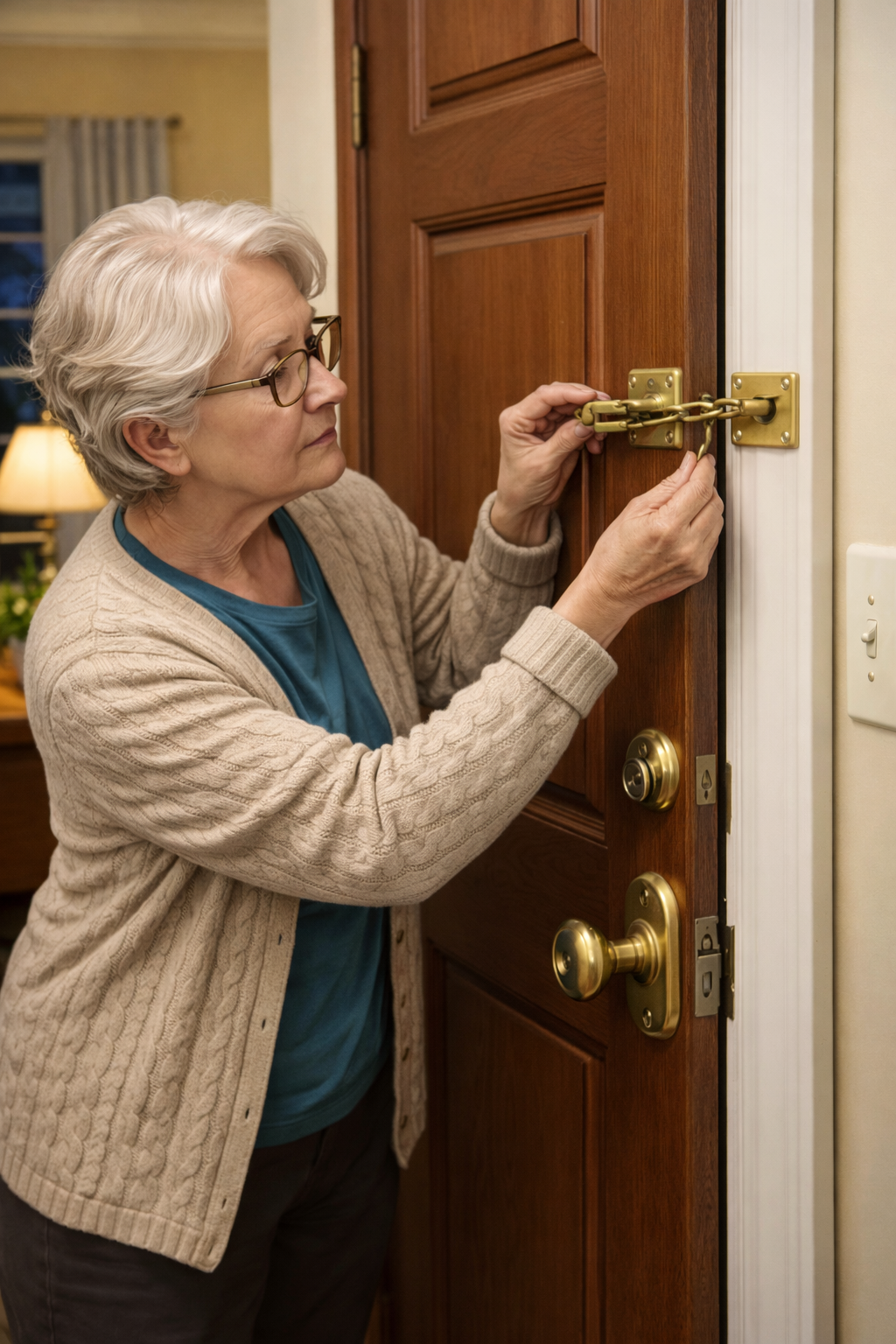
First, look at your home's points of entry, doors and windows. You can reinforce doors by using 3" screws to reinforce door strike plates and hinges, making them more difficult to kick in. Install a security bar or door jammer inside for extra reinforcement.
Have secure locks with deadbolts. Use wooden dowels, PVC pipes or commercial security bars door to put in the tracks of sliding glass doors to prevent them from being forced open.
Security alarm systems will notify help if there is an intruder or you can activate them from inside to summon help also. They will notify police, fire, emergency medical help and your listed contacts to summon help. Video doorbells such as Ring doorbells will allow you to see and talk with the person at the door without opening the door and you will see video footage of who is at or near the door from a smart phone even when you aren't home. And never let anyone you don't know or expect in your home unless you know them specifically or have a scheduled appointment with a contractor. You can ask people to show ID before you open the door. And if possible, have a friend or family member over when workers are in your home. When in doubt, play it safe, and you can call 911 if you feel uneasy.
Install outside motion sensor security lighting near doors, driveways and garage entrances to illuminate intruders. And use timers on lamps at different places in your home and stagger the on and off time to give the illusion someone is home, even when you are not home. Inside motion sensors that emit a loud noise will also ward off an intruder. Security cameras both inside and outside the home that connect to the internet will also help you monitor any suspicious activity.
Use curtains or blinds to keep potential intruders from seeing your valuables. Some seniors have a dog to help ward off intruders or post a sign about a dog.
Look at the landscape outside your home. Are your shrubs and beds overgrown, enabling people to hide near your entrances? Keep them trimmed back for visibility.
And be aware of your surroundings when you are outside, day and night. Getting to know your neighbors is useful not only for socialization but for familiarity to recognize when someone unfamiliar is hanging around the neighborhood and watching. Changing up your routine can be helpful so potential burglars don't always know when you are going in and out. Some people will leave a pair of dirty boots outside on the porch to make it look like someone is in the house.
With the popularity of social media, many people want to post their vacation photos. But it is best to avoid posting photos of vacations or outings until you are back home. Don't advertise being away. And avoid putting your name on a mailbox, and have someone either pick up your mail or newspapers when you are away or stop delivery at the post office until you return.
For many people who live alone, extra security measures offer additional peace of mind.